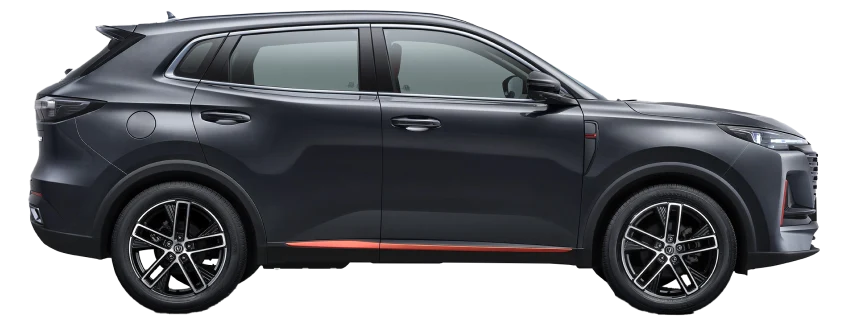
Resolve the four family descriptions
A short enquiry can bring back original CS55, CS55 PLUS, original CS75 and CS75 PLUS offers. Ask sellers to state which family each candidate belongs to and retain the generation and build date. A current regional brochure should not become the specification for an older car with a similar name.
Use the CS55 identity guide and request an equivalent record for the CS75 candidate. Keep documents and photographs attached to each VIN. This prevents a comparison from accidentally becoming a contest between different generations while its heading suggests two simple model choices.
Define the practical customer requirement
Ask what the vehicle needs to do in normal use: passenger access, luggage handling, urban parking, mixed journeys or work-related transport. List the requirements that can be checked and keep styling preferences separate. Do not assume that a higher model number guarantees every practical advantage your customers need.
Obtain applicable measurements or a demonstration when space matters. A nominal capacity or a carefully arranged photo may not explain the actual task. The practical-use guide gives a way to compare the candidate's cabin and luggage arrangement against the intended customer’s practical requirements.
Apply equivalent inspection depth
Two reports should cover comparable areas and disclose their limitations. A detailed CS55 examination should not be ranked against a CS75 promotional video as if both provide equal evidence. Ask for the same core identity, structure, powertrain, cabin and road-assessment scope where practical.
Compare the preparation needed to meet your dealership's sale standard. A newer-looking car with unpriced work may be harder to assess than an older candidate with clear records and a defined repair scope. Use the inspection checklist to make the acceptance standard explicit.
Check the workshop consequences
Send both candidates' powertrain details and known repair requirements to your workshop. Ask about technical support, compatible parts and realistic lead times. Similar brand names do not establish interchangeable components or identical service materials.
For repeated imports, consider whether one configuration would simplify preparation and stocking. If the two models serve different customer groups, keep their plans separate rather than forcing them into one generic service package. Practical support should be based on supplier and workshop responses for the identified vehicles.
Compare complete quotations
Align currency, handover point, inspection, preparation and included origin services. Keep destination estimates and any unresolved work visible. A vehicle-only offer cannot be treated as a fully delivered cost, and a low headline price does not quantify a missing diagnosis.
The price worksheet helps establish a fair basis. Evaluate the verified features that your customers value, then consider preparation timing and the evidence quality. Avoid promising a fixed resale premium or guaranteed stock turnover based on the model name alone.
Keep two customer scenarios separate
One dealership may serve buyers who prioritise manageable preparation and verified everyday equipment. Another may need a specific cabin or luggage arrangement and be willing to review a broader budget. Write those scenarios before comparing the candidates, then evaluate each car against the scenario it is intended to serve.
Do not assume the same specification mix belongs in both retail segments. Ask the sales team which requirements are supported by actual customer conversations and which are only preferences within the team. Use the vehicle evidence to establish whether the candidate meets those requirements; customer interest alone cannot prove equipment, condition or future resale value.
When the next offers arrive, revisit the actual comparison rather than carrying forward the previous model choice automatically. Different service history, repair work or quoted scope can change the outcome. The stable element should be your decision process: identify the car, verify the practical fit, assess condition and support, and compare a clearly defined commercial offer.
State why the selected car fits
Record the practical reason for your choice: demonstrated suitability, acceptable condition, supported configuration and clear total scope. That explanation is more useful to the sales and receiving teams than a blanket claim that CS55 or CS75 is always better.
Use the Panda CS55 enquiry to describe your main brief and identify CS75 as an alternative if appropriate. Request separately identified offers with equivalent evidence. The outcome should be a decision your team can defend from the actual cars and requirements, while preserving flexibility when the next available candidates differ.