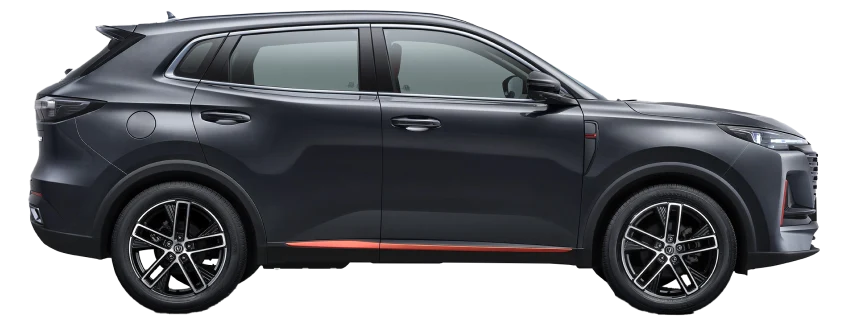
Describe a normal week of use
Ask whether the intended customer mainly makes short urban journeys, carries family members, transports work equipment or combines several uses. Record the constraints that matter: parking space, easy cabin access, luggage shape, climate comfort and essential controls. These details give the sourcing team something more useful than a request for the best trim.
Avoid assuming a model name answers all those questions. Original CS55 and later PLUS candidates can differ in layout and equipment. Use the family comparison first, then evaluate the actual car against the customer's normal use.
For urban customers, use the city fuel-use worksheet alongside the practical-use assessment.
A confirmed plug-in iDD candidate adds an access question to the ordinary week. The no-home-charging review tests whether permitted compatible access fits the actual routine before valuing that benefit.
Check seating and access directly
Verify the seat configuration and examine how the front and rear seating positions work for the intended users. Where practical, demonstrate access, adjustment and the space remaining behind the front seats in a realistic position. Photographs taken with seats moved to extremes can create an impression that does not reflect normal use.
If child-seat compatibility or another restraint-related requirement matters, obtain the applicable vehicle and equipment guidance and confirm suitability with the responsible specialist. Do not infer universal compatibility from a visible mounting point. Keep safety-related claims tied to the particular configuration and appropriate evidence.
If a Creta is available, the CS55 and Creta review repeats the same passenger task while keeping original market, actual powertrain and local or import scope explicit.
Measure the luggage task
Identify the actual objects the customer expects to carry and ask for relevant measurements or a demonstration. A nominal capacity figure may not explain opening shape, load-floor access or how much room remains with passengers seated. Confirm the seat-folding arrangement and the condition of the mechanisms on the candidate.
List any missing luggage cover, spare equipment or other accessory separately. Ask whether it is included before relying on a reference photograph. These details belong in the vehicle record so the receiving team knows what to expect at handover.
For family enquiries, assess the boot space and child-seat arrangement together rather than relying on maximum cargo volume.
Evaluate parking and low-speed use
Show the driver's view, mirrors and parking display where fitted. Test the equipment and record any warning or visibility issue. Camera appearance alone does not prove the full system works. For buyers spending much of their time in slow traffic or tight parking areas, ask the inspector to include appropriate low-speed operation in the road assessment.
The transmission guide explains why the installed unit should be identified before interpreting its behaviour. Avoid a blanket assumption that one gearbox label makes every candidate better for urban use regardless of condition, maintenance and support.
For restrictive entrances, review the CS55 ramp and speed-hump checks before accepting a clearance claim.
After practical parking access is understood, the camera value comparison asks whether a demonstrated fitted view improves the task enough to justify the complete equipment difference.
Consider comfort and support together
Demonstrate ventilation, cooling, seat functions and the everyday display controls. Ask whether the customer needs online services or mainly local functions. A simpler verified arrangement may suit one buyer, while another requires a particular feature and its dependencies to be confirmed.
Consider where the vehicle will be serviced and how parts will be obtained. A practical family purchase includes a support plan as well as an appealing cabin. Use the service guide to discuss that plan with the destination workshop before expanding a dealer order.
Build a simple use scenario
For a customer who regularly carries family luggage, ask for photographs with the seats in their intended positions and the relevant load area measured. For a buyer with a tight parking space, obtain the measurements and visibility demonstration needed for that specific setting. These checks answer practical questions that a general SUV description cannot settle.
Keep the requested demonstration proportionate. You do not need to test every possible use; you need evidence for the requirements that determine this purchase. If the seller cannot demonstrate an essential condition, mark the candidate as awaiting confirmation rather than assuming the model family guarantees it.
Your dealership can reuse the resulting requirement list when comparing another candidate, but each vehicle still needs its own response. A clear use scenario makes the shortlist more focused while leaving room for different years or equipment combinations that meet the same customer need.
Translate the result into an enquiry
Write a brief stating essential use requirements, acceptable model families, year preferences and the condition evidence needed. Keep optional styling preferences in a separate part of the brief so they do not displace more important practical conditions.
Send it through the Panda CS55 desk. Current vehicles and specifications are assessed against that brief. A reference model photograph can introduce a family, but only a candidate-specific review can establish whether the proposed car fits the customer's everyday use.